
Before you toss your Thanksgiving turkey carcass in the trash, consider how you could transform it into several nourishing, nutrient-rich meals that will carry you through the holiday season.

With a handful of simple ingredients and a few hours of simmering, what might otherwise go to waste becomes a flavorful homemade bone broth that supports gut health, immune function, joint health and connective tissue maintenance. Simple ingredients, minimal effort, tons of nutrients and meals already prepped in the midst of holiday madness — what's not to love?
What makes bone broth so nourishing? When bones, skin, cartilage and connective tissues are slowly simmered in water, collagen breaks down into gelatin, releasing amino acids such as glycine and proline into the broth. Bone broth can also provide glutamine, glucosamine and varying amounts of minerals. Glutamine is particularly important for gut health, as it serves as a fuel source for the cells lining our intestines and plays a role in maintaining the integrity of our intestinal barrier. Meanwhile, collagen-derived amino acids provide building blocks that our bodies can use to maintain skin, cartilage, tendons, ligaments and other connective tissues.
Supporting your immune system during cold and flu season. With a substantial portion of our immune system residing within and around our digestive tract, supporting gut health is an important part of supporting immune health. A healthy intestinal barrier helps protect the body from potentially harmful substances while allowing essential nutrients to be absorbed. Bone broth provides hydration and amino acids that contribute to normal bodily functions, including the production of glutathione, one of the body's naturally occurring antioxidants. While bone broth isn't a cure or preventative treatment for colds and the flu, it can be a comforting, easily digestible and nourishing addition to your diet, especially during the colder months.
The beauty of homemade bone broth is its simplicity. Adding a small amount of apple cider vinegar or lemon juice may help release minerals from the bones, while a slow simmer allows collagen to break down into gelatin. If your broth develops a jelly-like consistency when refrigerated, that's a good indication that you've extracted a substantial amount of gelatin. Combine your homemade broth with colorful vegetables, prebiotic-rich foods like onions and garlic, fresh herbs, healthy fats and leftover turkey for a balanced meal that provides complete protein, fiber, complex carbohydrates and a diverse range of nutrients to support your microbiome and overall health.
Perhaps the best part is that one afternoon of cooking can set you up with nourishing meals for weeks to come. Enjoy your broth as a warm, savory beverage, use it to cook rice or quinoa, steam vegetables, or freeze it in individual portions for future soups and stews. During a season when our schedules become busier and our routines are often disrupted, having nutritious, homemade meals readily available is one of the simplest ways to continue prioritizing your health. So this Thanksgiving, save those bones!
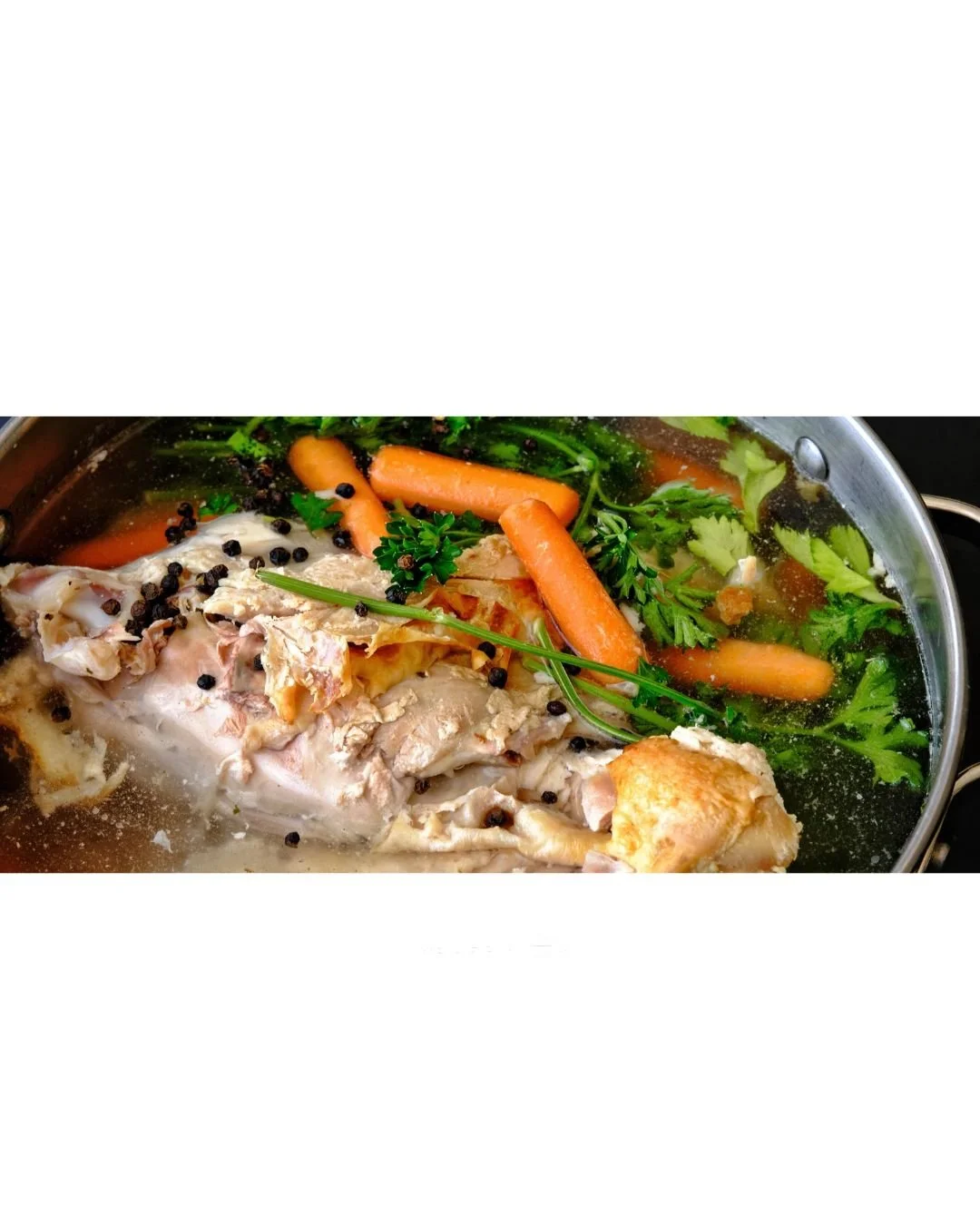
Recipe 1: Homemade Thanksgiving Turkey Bone Broth
Prep time: 10 minutes
Cook time: 4–12 hours
Yield: Approximately 10–14 cups, depending on evaporation
Ingredients
1 leftover roasted turkey carcass, including bones, skin and cartilage
2 large carrots, roughly chopped
3 celery stalks, roughly chopped
1 large yellow onion, quartered
4 cloves garlic, crushed
2 tablespoons apple cider vinegar or juice from half a lemon
2 bay leaves
3 sprigs fresh rosemary
4 sprigs fresh thyme
4–6 fresh sage leaves
1 small bunch fresh parsley
10–16 cups water, or enough to cover the bones
Sea salt and black pepper to taste
Instructions
Remove any remaining edible turkey meat from the carcass and refrigerate it for your soup. Keep the bones, skin, joints and cartilage.
Place the turkey carcass in a large stockpot, breaking it into smaller sections if necessary.
Add the carrots, celery, onion, garlic, fresh herbs and apple cider vinegar.
Add enough water to just cover the bones. Avoid using too much water, as this can dilute the gelatin concentration.
Bring to a boil, then immediately reduce the heat to a gentle simmer.
Partially cover and simmer for 4–12 hours, adding water as needed to keep the bones submerged. Six to eight hours is a great starting point. Do not leave an active stovetop unattended.
Strain the broth through a fine-mesh strainer, removing all bones, bone fragments, vegetables and herbs.
Season with salt and pepper to taste.
Use immediately to make soup, or divide into smaller containers, cool promptly and refrigerate or freeze for future meals.
Helpful tip: Don't worry if your broth doesn't turn into a gel when refrigerated. It can still provide valuable nutrients and be used in all the same ways.
Recipe 2: Nourishing Harvest Turkey & Vegetable Soup
Prep time: 15 minutes
Cook time: 35–45 minutes
Servings: Approximately 6
Gluten-free, dairy-free and whole-food based
Ingredients
Soup base:
8 cups homemade turkey bone broth
3–4 cups shredded leftover turkey
2 tablespoons extra virgin olive oil
Vegetables:
1 large yellow onion, diced
3 cloves garlic, minced
3 carrots, sliced
3 celery stalks, sliced
1 medium sweet potato, cubed
1 zucchini, chopped
2 cups chopped kale or spinach
1 cup green peas
Herbs and seasonings:
1 teaspoon dried thyme
1 teaspoon dried rosemary
½ teaspoon dried sage
1 bay leaf
¼ cup fresh parsley, chopped
Juice of half a lemon
Sea salt and black pepper to taste
Optional additions for extra fiber and nutrients:
1 cup cooked wild rice or quinoa
1 cup cooked white beans
Instructions
Heat the extra virgin olive oil in a large soup pot over medium heat.
Add the onion, carrots and celery. Sauté for 5–7 minutes until softened.
Add the garlic, thyme, rosemary and sage. Cook for another minute until fragrant.
Pour in the homemade turkey bone broth and add the sweet potato and bay leaf.
Bring to a gentle boil, reduce the heat and simmer for 15–20 minutes, or until the sweet potato is nearly tender.
Add the zucchini and green peas. Simmer for another 5–7 minutes.
Stir in the shredded turkey, kale or spinach, and any optional cooked grains or beans. Continue cooking until the turkey reaches 165°F and the greens are tender.
Remove the bay leaf and stir in the fresh parsley and lemon juice.
Season with salt and pepper to taste and serve with an optional drizzle of extra virgin olive oil.
Storing Your Bone Broth & Soup
Refrigerator: Store in airtight containers for up to 3–4 days at 40°F or below.
Freezer: Freeze in individual portions for up to 2–3 months for best quality.
Meal prep tip: Freeze extra bone broth in silicone trays for convenient, smaller portions to use when cooking vegetables, grains or sauces.
Food safety: Refrigerate or freeze your turkey carcass within two hours of serving. Divide freshly prepared broth and soup into shallow containers and refrigerate within two hours. Reheat leftover soup to 165°F.
Less waste. More nourishment. One less thing to think about during the holiday season.
Inspired by Dr. Liz Lipski's Gut Healing Foods interview with the Functional Medicine Coaching Academy.
